
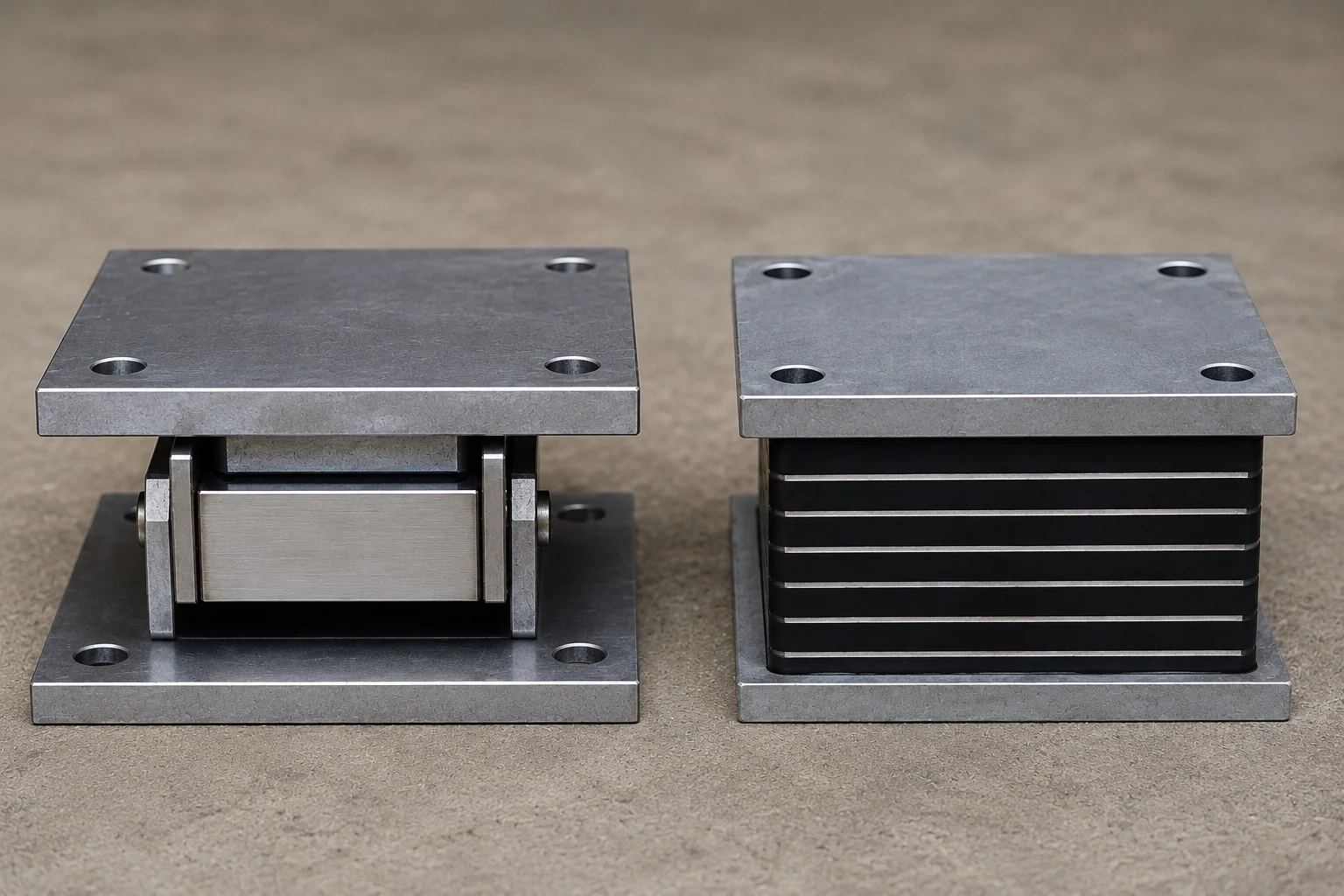
When designing bridges, buildings, mining infrastructure, or industrial structures, selecting the correct structural bearing is critical to ensuring long-term durability, movement accommodation, and load transfer performance. Two of the most commonly specified solutions are steel structural bearings and elastomeric bearings. While both serve the same fundamental purpose of transferring loads safely while allowing structural movement, they differ significantly in design, performance, maintenance requirements, and ideal applications.
Understanding the differences between these bearing systems can help engineers, consultants, and contractors choose the most suitable solution for their project.
What Are Steel Structural Bearings?
Steel structural bearings are mechanical bearing systems manufactured primarily from fabricated steel components. Examples from the HERCULES range include:
- Free Float bearings (HLD/FF)
- Fixed bearings (HLD/FX)
- Sliding Guided bearings (HLD/SG)
- Pot bearings (HPT)
These systems are typically designed for high-load applications where controlled movement and rotational capacity are required.
Advantages of Steel Bearings
High Load Capacity: Steel bearings can support extremely large vertical loads, making them ideal for long-span bridges, heavy industrial structures, and major infrastructure projects.
Precise Movement Control: Steel bearing systems can be engineered to allow movement in specific directions while restraining movement in others. Guided and multidirectional sliding bearings are commonly used where precise structural behaviour is required.
Large Rotational Capability: Pot bearings can accommodate significant rotational movements that may exceed the capability of elastomeric systems.
Long-Term Performance in Complex Structures: For heavily loaded or dynamically sensitive structures, steel bearings often provide superior long-term performance and predictability.
Limitations of Steel Bearings
Despite their advantages, steel bearings also come with several considerations.
Higher Maintenance Requirements: Steel bearings contain moving mechanical parts that are susceptible to wear-and-tear, and may require periodic inspection, lubrication, corrosion protection or replacement of sliding materials. In aggressive marine or industrial environments, corrosion protection becomes especially important.
Higher Initial Cost: Steel structural bearings are generally more expensive than elastomeric alternatives due to fabrication complexity, machining, and installation requirements.
More Complex Installation: Installation tolerances for steel bearings are typically tighter, often requiring precise levelling, alignment, and grout installation.
What Are Elastomeric Bearings?
Elastomeric bearings are flexible bearing pads manufactured from natural rubber or neoprene elastomer compounds. These bearings transfer loads through compression while accommodating movement through elastic deformation of the rubber.
The most common form used in bridge and building applications is the laminated elastomeric bearing, which consists of alternating layers of elastomer and internal steel reinforcing plates bonded together during vulcanisation. Laminated elastomeric bearings are specifically designed to increase load capacity and rotational performance while maintaining flexibility. The internal steel laminates prevent excessive bulging of the rubber under compression, allowing the bearing to support significantly higher vertical loads compared to plain elastomeric pads.
Advantages of Elastomeric Bearings
Low Maintenance: One of the biggest advantages of elastomeric bearings is their simplicity. Since they contain no moving mechanical components, maintenance requirements are minimal. This makes them highly attractive for: highway bridges, rail structures and precast concrete structures.
Cost-Effective Solution: Compared with steel bearings, elastomeric bearings are generally more economical to manufacture and install. Their simplified design reduces fabrication costs, installation time, inspection requirements and lifecycle maintenance costs.
Simple Installation: Elastomeric bearings are relatively forgiving during installation and often require less specialised equipment than steel systems.
Limitations of Elastomeric Bearings
While elastomeric systems are extremely versatile, they are not suitable for every application.
Limited Load Capacity: Although laminated elastomeric bearings can support substantial loads, extremely heavy structures may still require steel bearing systems.
Limited Movement Capability: Elastomeric bearings accommodate movement through shear deformation of the rubber. Excessive movement demands may exceed the practical limits of the material.
Environmental Considerations: Exposure to oils, chemicals, UV radiation, or extreme temperatures may affect long-term elastomer performance if unsuitable materials are specified.
Choosing the Right Bearing for Your Project
Bearing selection should always consider:
- Vertical and horizontal loads
- Rotational capacity
- Thermal movement
- Seismic requirements
- Environmental exposure
- Maintenance accessibility
- Design life expectations
- Applicable design standards
Final Thoughts
Both steel structural bearings and elastomeric bearings play essential roles in modern infrastructure. Steel systems provide exceptional load capacity and movement control for demanding applications, while laminated elastomeric bearings offer a durable, economical, and low-maintenance solution for a wide range of structures.
Selecting the correct bearing solution early in the design process helps improve durability, reduce maintenance costs, and extend the service life of the structure. An engineered assessment ensures the selected bearing system delivers optimal long-term structural performance while remaining economical and practical for the project. Should you require assistance with bearing selection and design for your project, contact a member of our team today.