In industrial facilities, slab-on-ground floors function as structural elements, not finishes. They are subjected to repeated forklift traffic, concentrated wheel loads, pallet racking reactions, and continuous operational cycling, often under 24/7 service conditions. Despite this, many slab failures do not originate from inadequate strength, but from poor accommodation of movement.
Cracking, joint arris degradation, spalling, and loss of flatness are typically symptoms of restrained shrinkage and thermal movement. Where slab movement is not deliberately managed, stresses are relieved through uncontrolled cracking and progressive joint deterioration. Correctly designed and detailed slab movement joints are therefore not a cosmetic or compliance item, they are a fundamental durability and lifecycle performance measure.
Understanding the Mechanics of Slab Movement
Concrete is a time-dependent material whose behaviour is governed by shrinkage, temperature variation, and restraint. During hydration and drying, concrete undergoes drying shrinkage, resulting in volumetric contraction. In service, thermal expansion and contraction occur as ambient and operational temperatures fluctuate.
In slab-on-ground systems, these movements generate tensile stresses. When restraint is present, at perimeter walls, columns, re-entrant corners, or through subgrade friction, those stresses accumulate. Once tensile capacity is exceeded, cracking occurs. Importantly, this cracking is not random in cause, only in location. Movement joints are the mechanism by which this behaviour is controlled. Expansion joints are commonly used to provide a physical separation, allowing slabs to expand without transferring compressive forces into adjacent elements.
In industrial slabs however, accommodating movement alone is insufficient. Load transfer across joints and columns is critical. This can be achieved through a permanent Slipjoint system, such as our Hercuslip Composite Slipjoints (HSC) that can take vertical loads, shear forces and accommodate lateral movement across continuous runs. Without effective load transfer, joints are prone to differential settlement, rocking, and edge loading, key precursors to spalling and serviceability failure.
The Structural and Operational Cost of Poor Joint Design
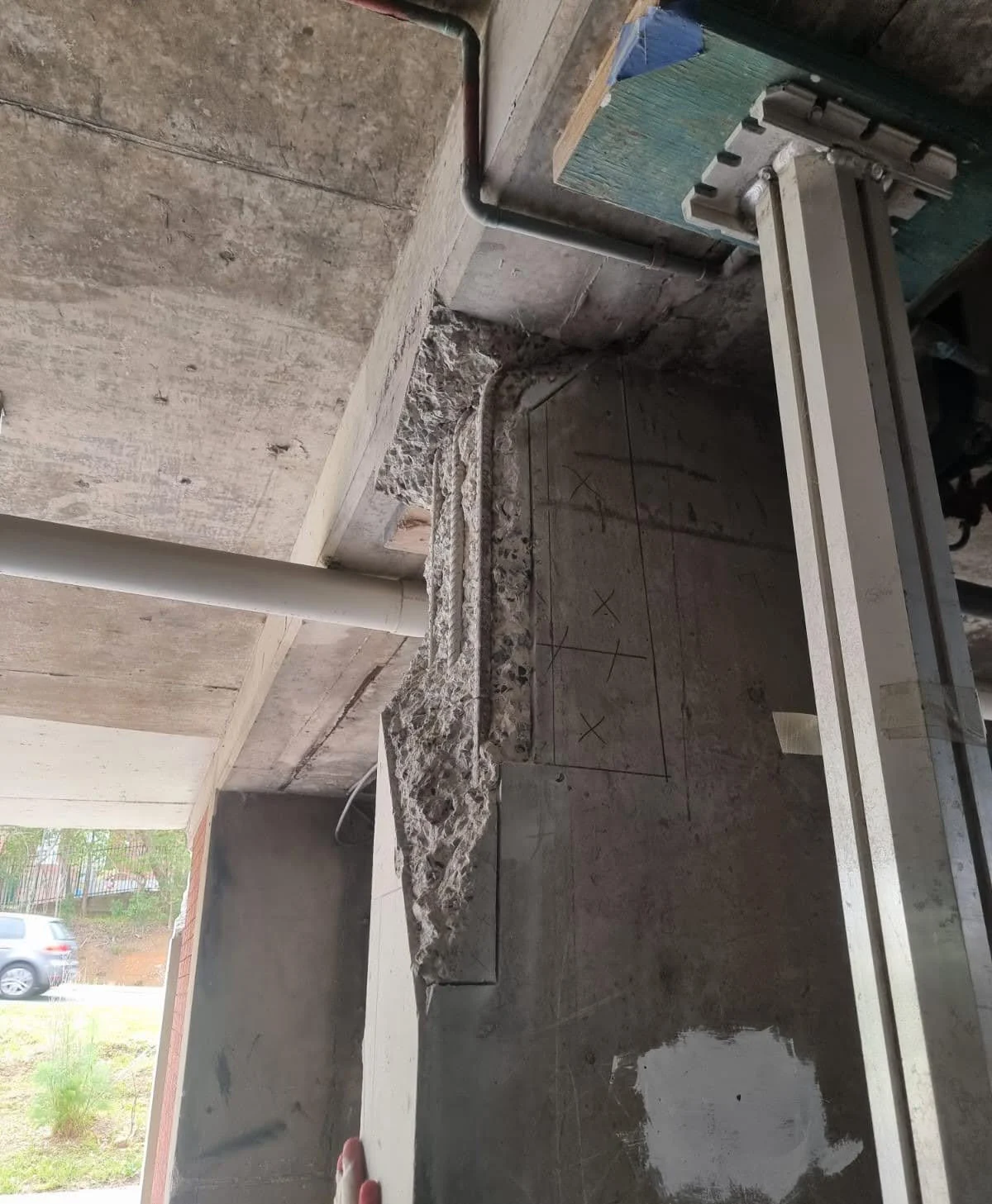
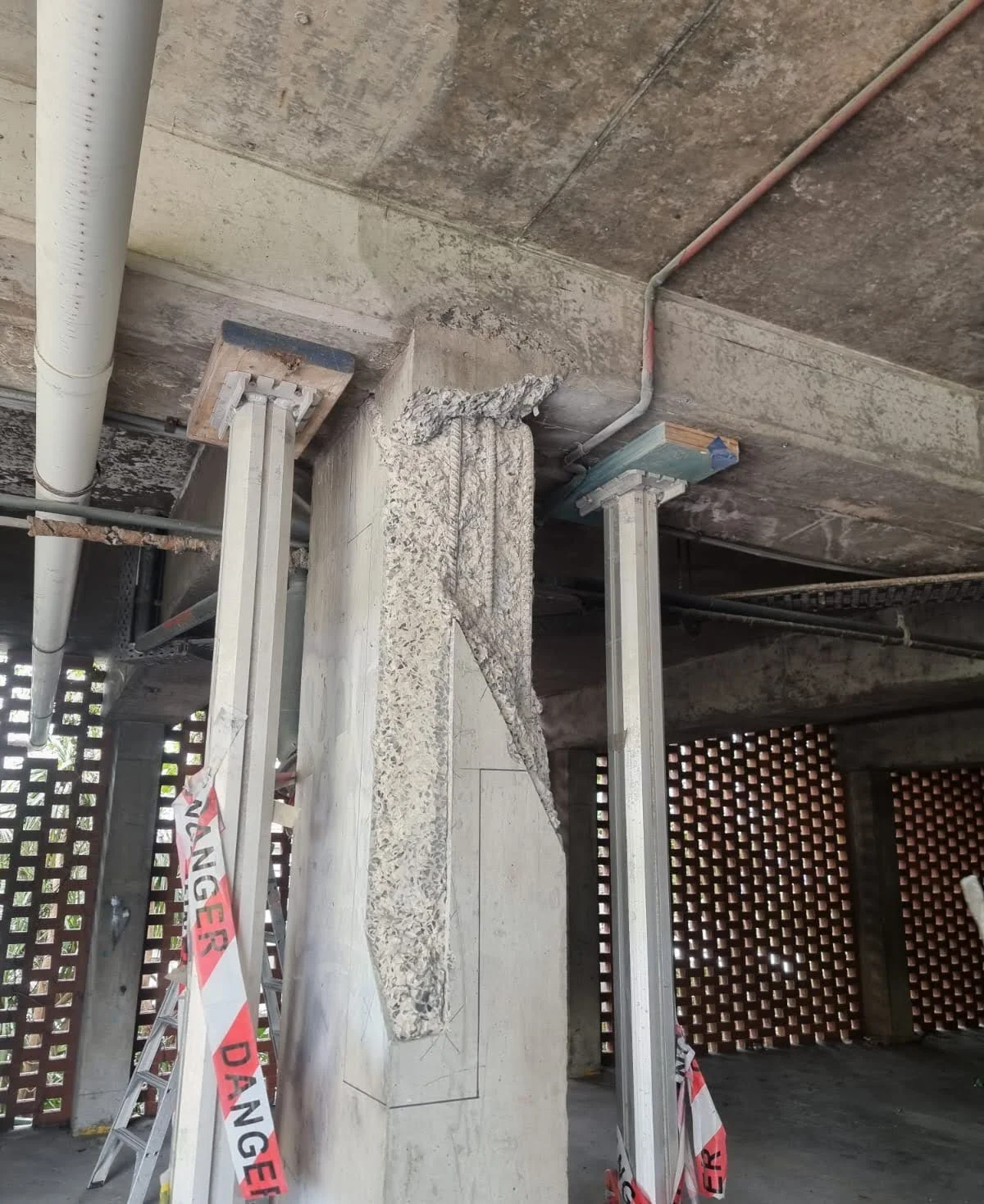
Where joints are poorly detailed, inadequately protected, or incorrectly specified, distress typically initiates at the slab-column interfaces. Repeated foot and vehicular traffic induce high local stresses, crushing unprotected edges and initiating progressive spalling. Once debris infiltrates the joint, movement is restrained, converting the joint into a locked crack and further amplifying stress concentrations.
From an operational perspective, the consequences extend well beyond surface damage. Floor repairs require traffic restrictions, temporary shutdowns, or reconfiguration of logistics paths. In high-throughput facilities, the indirect cost of downtime frequently exceeds the direct repair cost.
There are also safety and performance implications. Vertical offsets at joints increase trip hazards, reduce forklift stability, accelerate tyre wear, and increase dynamic loading on vehicles and racking systems. These issues manifest as higher maintenance costs, reduced operational efficiency, and increased WHS risk exposure.
Conclusion
Industrial slabs rarely fail due to unpredictable behaviour. They fail because the predictable behaviour of concrete i.e. shrinkage and thermal movement is not properly addressed at the design and detailing stage. Investing in engineered slab movement joints at construction delivers measurable lifecycle benefits: reduced cracking, improved load transfer, maintained flatness, and lower maintenance intervention.
HERCULES have a long standing track record of providing movement joint solutions engineered specifically for high-load, high-traffic environments within Australia and abroad. From our standard range of Hercuslip Composite Slipjoints (HSC) for loads up to 500kN/m, to our Heavy-Duty Slipjoints (HDSJ) for loads exceeding that, our products are designed to prolong the operational life of industrial slabs and the structures without the need for constant maintenance.
*see photos below of slab-column interfaces without movement joints.